
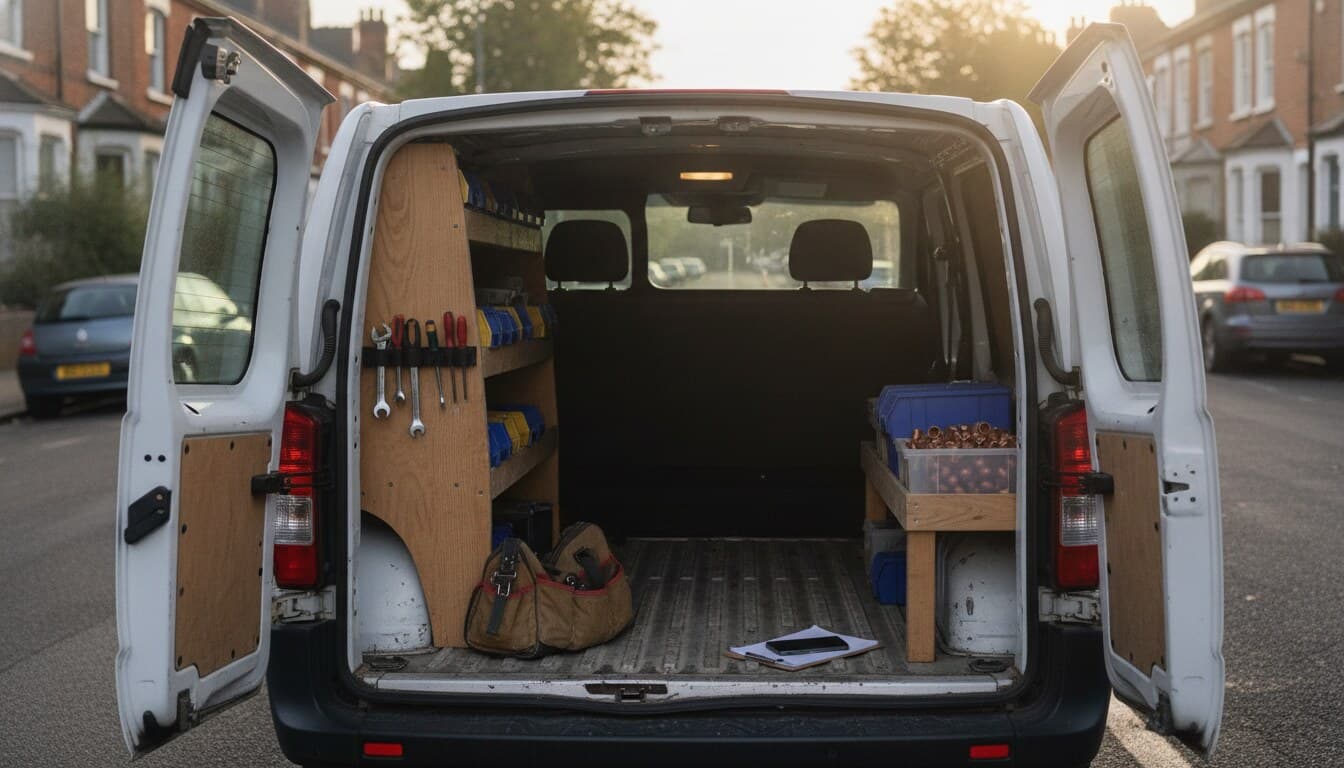
If you work with your hands for a living, the phone is a problem you've never really solved. You're up a ladder, under a sink, or holding a live cable. You physically cannot answer it, and even if you could, stopping mid-job to talk isn't safe or professional. So it rings out, and you tell yourself you'll ring back at lunch.
By lunch, the job's gone.
The reason it's already gone
Here's the part most trades underestimate. Your caller isn't only ringing you. The Federation of Master Builders tells homeowners plainly: "You should always get a minimum of three quotes." That's the official advice the public follows. It means the person calling about a leak, a rewire or an extension has a list, and you're one name on it.
So when you don't pick up, they don't sit and wait for you. They dial the next number. Whoever answers, talks them through it and gets a time in the diary is the one who walks away with the job. Not necessarily the best trade. The available one.
That's the uncomfortable truth about a missed call. It isn't a missed conversation you can pick back up later. It's a job you've quietly handed to a competitor who happened to be free to talk when you weren't.
Why "I'll call them back" quietly loses money
The callback plan feels reasonable, but it breaks in two places.
First, by the time you ring back, they've often already booked one of the other two or three trades they called. You're now the fourth quote nobody needed, chasing work that's already been won.
Second, callbacks eat your evening. You finish the job knackered, then sit in the van working through a list of numbers, half of which now go to voicemail themselves. You end up doing admin at 9pm instead of resting, and still catching only some of them.
Answering faster isn't really the fix. Not missing the call in the first place is.
Answer every call without coming off the job
This is the whole point of an AI receptionist. Your business number is answered 24/7 by a voice assistant that sounds like your business and does the bit you can't stop to do:
- Greets the caller as your company and asks what they need.
- Checks your live calendar, Google or Outlook, the same diary you already run your days from, so it only offers times you're genuinely free.
- Books, moves or cancels the appointment there and then, around the slots you actually have.
- Texts the customer a confirmation from your business number, which also cuts no-shows.
You don't touch your phone. You stay on the tools. When you climb down and check it, there's a survey booked into Thursday morning and a confirmation already sent, off a call you never even heard ring.
It works with the Google or Outlook calendar you already use, so there's no new system to learn and nothing to migrate. Setup takes minutes: connect your calendar, tell it your services, prices and hours, and point your number at it. There's a full rundown of how it handles site visits, quote requests and emergency callouts on the AI receptionist for tradespeople page. If you want to compare products before you pick one, our plumbers guide puts five UK AI receptionists side by side on their own published prices.
Here is a homeowner with a fence panel down after the wind, booked in for a free quote visit before the call ends:
Sample call

A fence panel repair and a free quote visit
Thalia · Oakhurn Property Repairs
1:15
A sample call with a made-up business. The receptionist's voice is the one real callers hear.
Read the transcript
- Receptionist: Just so you know, you're speaking with an AI assistant, and this call is transcribed. Thank you for calling Oakhurn Property Repairs, how can I help you today?
- Caller: Hi. The wind's taken out one of my fence panels. Do you do small jobs like that?
- Receptionist: Yes, we do. We book a free half-hour quote visit first, so you get a proper price. Which day suits?
- Caller: Thursday would be good. After five, if you can.
- Receptionist: Let me have a look at Thursday.
- Receptionist: Thursday the 8th, I've got five PM or five thirty PM.
- Caller: Five's fine. It's Graham.
- Receptionist: Thanks, Graham. And the postcode and first line of the address?
- Caller: GU2. Twelve Orchard Rise.
- Receptionist: So that's a quote visit for Graham at twelve Orchard Rise, GU2, on Thursday the 8th at five PM. Shall I book it?
- Caller: Yes, please.
- Receptionist: Right, I'll book that in.
- Receptionist: All sorted, you're booked in. Look out for a confirmation text and a reminder the day before. Anything else I can help with?
- Caller: No, that's all, thanks. Bye.
- Receptionist: Thanks for calling Oakhurn Property Repairs, have a great day!
The maths trades actually care about
Think about one job you lost this month because you couldn't get to the phone. Not a call-out, a proper job. A boiler, a consumer unit, a bathroom. Whatever your average job is worth, that's the number to hold in your head.
Vocalenda is £49 a month on our founding rate (the standard price is £69), one flat plan, cancel anytime. No setup fee and no per-minute meter: the plan includes 500 call minutes a month, enough for roughly 250 bookings at a typical two-minute call. Catch a single job you'd otherwise have lost to a rival, one, in a whole year, and it has already paid for itself several times over. Most trades lose that much in a fortnight.
There's a 30-day free trial, so you can point your own number at it and hear it answer a real call before you pay a penny. Start your free trial, or see the full pricing first if you'd rather do the sums. Still weighing up the market? Here's how AI receptionists compare in the UK.
Common questions
Can an AI receptionist answer my calls while I'm on a job?
Yes. Your business number is answered 24/7 by a voice assistant, so calls are picked up even when you're up a ladder or under a sink and can't touch your phone. You don't have to stop working or call anyone back.
Does it work with the calendar I already use?
It works with the Google or Outlook calendar you already run your days from. It reads your live availability and books, moves or cancels jobs straight into it, so there's no new system to learn and nothing to migrate.
How much does an AI receptionist cost for a tradesperson in the UK?
Vocalenda is £49 a month on the founding rate for the first ten businesses (the standard price is £69), one flat plan with no setup fee and no per-minute charges. The plan includes 500 call minutes a month, and there's a 30-day free trial.
What happens to callers if I miss the call, do they get voicemail?
No. The assistant answers instead of sending callers to voicemail, then texts them a confirmation from your business number. That matters because homeowners are advised to get at least three quotes, so a caller who hits voicemail usually just rings the next trade on their list.
Want more guides like this in your Google results? Add Vocalenda as a preferred source.
Add Vocalenda on Google